
What happened
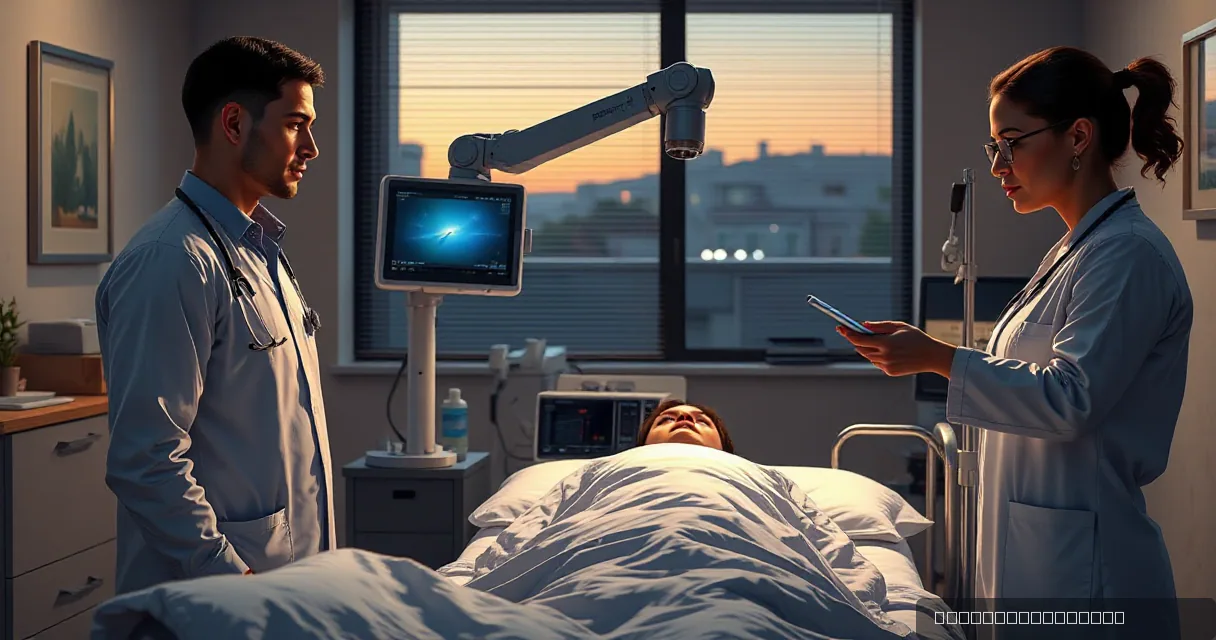
A new open platform aims to teach medical robots to understand the complexities of the real world, including anatomical variations and tool behavior.
Why it matters
Open-sourcing such a simulation could accelerate the creation of safe medical robots by allowing them to train on diverse physical scenarios without risking patients in the real world.
NVIDIA has announced the open-sourcing of its first-of-its-kind medical physics simulation platform, which operates with graphics processing unit (GPU) acceleration. This initiative addresses a fundamental challenge: before medical robots can become useful in real-world practice, they must learn to respond to the physical resistance of their environment.
Developers face the reality that human anatomy varies, and surgical instruments can bend, press, slide, and interact with tissues in unpredictable ways. Furthermore, medical imaging data is often noisy or incomplete, complicating the training of autonomous systems.
Rare and edge-case scenarios present particular difficulty; these are critical for developers to understand but do not occur on schedule during standard testing. The new open simulation environment was created specifically to allow engineers to practice these complex situations in a virtual space.
Facts
- NVIDIA has open-sourced a framework for medical physics simulation.
- The simulation utilizes graphics processing unit (GPU) acceleration.
- The project's goal is to train medical robots to interact with the physical world.
- The simulation accounts for anatomical variations, tool behavior, and noise in imaging data.
- The tool is designed to model rare scenarios that are difficult to reproduce on a schedule.
Context
Developing autonomous medical systems requires vast amounts of data regarding physical interactions, which are difficult to collect in clinical settings. Open simulators are becoming a key tool for filling these data gaps.
What remains unknown
- Which specific libraries or components were included in the open release?
- How accurately does this simulation reproduce soft tissue physics compared to real-world experiments?
- What will be the level of adoption of this tool by third-party medical equipment developers?
AI analysis
NVIDIA's move indicates a strategy to build an ecosystem around its hardware solutions for healthcare. By providing free access to complex simulation tools, the company encourages developers to create applications optimized for its architecture even before final robotic products reach the market.
Strategic AI conclusion
A likely consequence will be an increase in startups and research projects using this simulation to train robot control algorithms. The next observable signal will be the emergence of initial scientific papers or demonstration prototypes created by external teams based on this framework. The primary uncertainty remains the industry's readiness to trust results from purely virtual training in matters of patient safety.